THE TESTDid ordinary life gain affordability, resilience, and agency?
Select a layer to reveal its chapters
TWO LEVELS OF THE SAME QUESTION
The thesis, then the civilization.
They overlap by design, but they do different intellectual work.
BOOK 1
BOOK ONE · AVAILABLE NOW
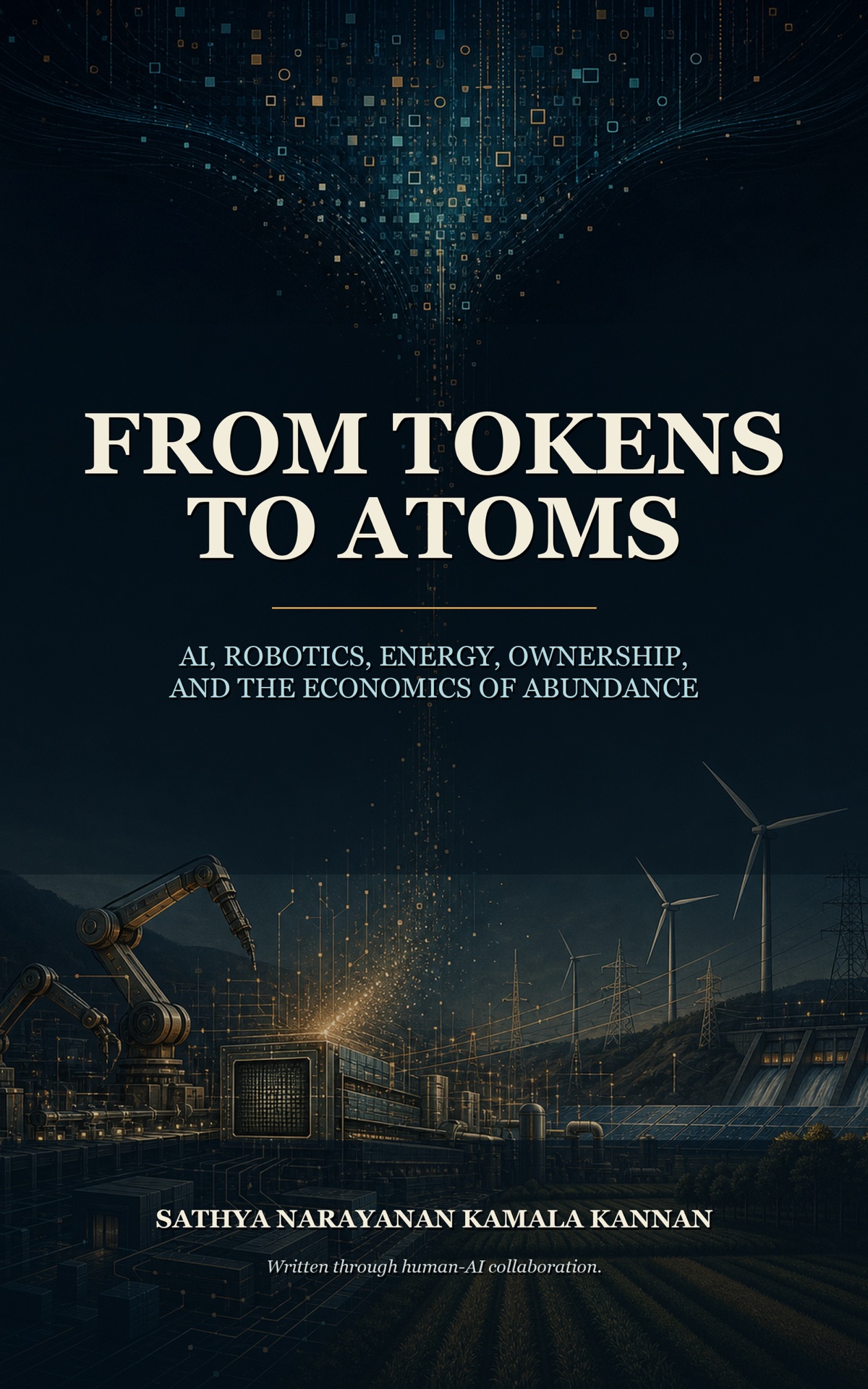
From Tokens to Atoms
AI, Robotics, Energy, Ownership, and the Economics of Abundance
The thesis-and-tests book
What would have to become true for AI-enabled abundance to be real—and what could remain scarce even then?
Begins with cheap cognition, tests its conversion into physical action, then examines complements, scarcity migration, prices, work, ownership, institutions, finance, and usable freedom.
START HERE IF
you want the economic argument: why more intelligence or output does not automatically create a better or freer life.
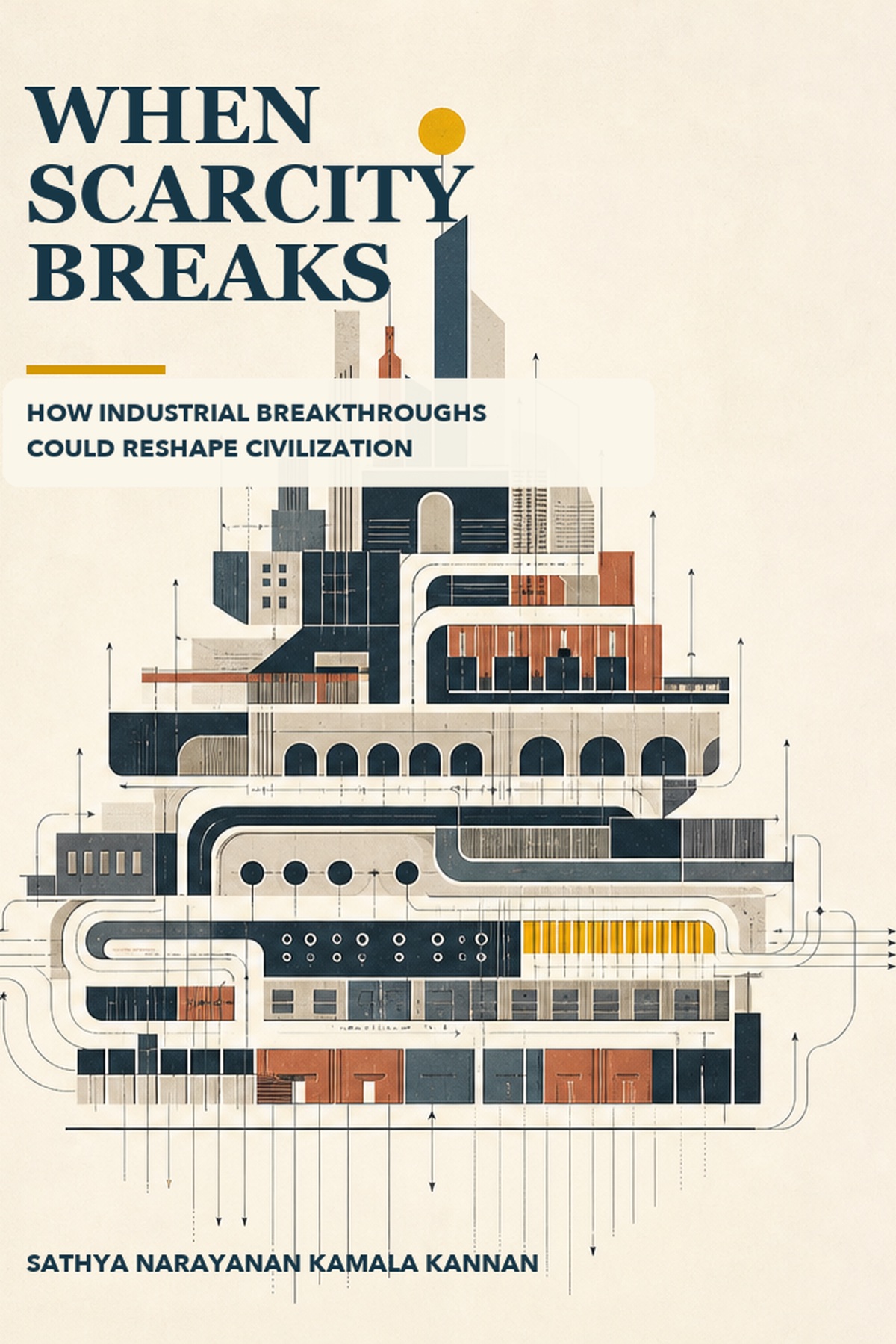
How Industrial Breakthroughs Could Reshape Civilization
The civilization-wide field guide
How could a new physical civilization be built end to end—and which breakthroughs, companies, and bottlenecks shape each layer?
Maps eight connected layers from energy and feedstocks through materials, machines, production, infrastructure, essential systems, and human outcomes, using specific companies as case studies.
START HERE IF
you want the concrete system map: technologies, companies, dependencies, and downstream effects across the physical economy.
The first asks whether abundance can become true and remain human. The second walks through the end-to-end civilization that would have to be rebuilt for that possibility to reach ordinary life.
TRY THE CORE IDEA
The constraint scanner
Select an input that becomes cheap. The value chain rarely becomes frictionless; the bottleneck usually moves.
WHAT GETS CHEAPCandidate answers and plans
→
WHAT GETS SCARCE NEXTVerification, integration, trust, and attention
THE BRIDGECheap cognition matters when an accepted result reaches a real workflow.
GO FROM MAP TO MECHANISM
Explore the full atlas
Search ideas, technologies, companies, or bottlenecks. Open any chapter for the argument beneath the headline.
40 chapters found
READ ACROSS BOTH BOOKS
Six routes through the atlas
Choose a question, then cross the boundary between cognition, industrial systems, institutions, and human outcomes.
ROUTE 01
Capability is only the first gate
When does an impressive system become dependable production?
Both books reject the leap from demonstration to destiny. One follows intelligence into configured physical action; the other follows a breakthrough through repeatability, scale, permission, integration, and adoption.